
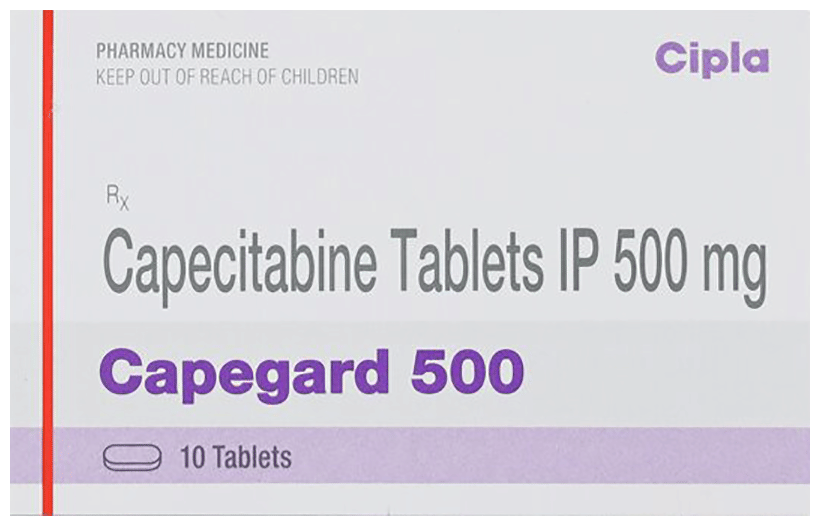
What is Capecitabine used for?
Colorectal cancer (adjuvant and metastatic) Breast cancer (after prior therapy) Gastric and other gastrointestinal cancers
An oral chemotherapy used in treatment cycles for several cancers. Availability is reviewed case by case.
In simple terms
Capecitabine is a prodrug of 5-fluorouracil (5-FU). It is converted into the active chemotherapy preferentially inside tumour tissue, where it blocks DNA synthesis in rapidly dividing cancer cells - oral chemotherapy that concentrates its effect at the tumour.
Brand and medicine details
- Active ingredient
- Capecitabine
- Dispensing location
- Confirmed only if an enquiry can proceed.
- Brand references
- Xeloda, Capegard, Capecitabine (generic)
- Strengths shown
- 500 mg, 150 mg
- Dosage form
- Tablet
A catalogue brand reference does not confirm the manufacturer, pack, source or availability for an individual enquiry. Confirm any proposed substitution with the treating oncology team.
How it may be prescribed
Taken twice daily with food in cycles (commonly 14 days on, 7 days off), exactly as the oncologist prescribes. Dose is calculated from body surface area and adjusted for kidney function.
Possible side effects to discuss with the care team
- Hand-foot syndrome (redness, peeling palms/soles)
- Diarrhoea, nausea, mouth sores
- Fatigue
- Low blood counts (monitored)
Requires oncologist supervision with regular blood monitoring. Patients with DPD enzyme deficiency can have severe toxicity - tell your doctor about prior 5-FU reactions. Interacts with warfarin. Supplied only against a valid specialist prescription.
Common questions about Capecitabine
Is generic Capecitabine genuine medicine?
Yes. Medrack refers only licensed medicine from a controlled supply chain, either the originator brand or a licensed branded generic from an established manufacturer. It is not an unbranded or unverified copy. The exact brand, manufacturer and pack are confirmed at the enquiry stage, and any proposed medicine should be reviewed with the treating oncology team.
Do I need a prescription for Capecitabine?
Yes. Capecitabine is a prescription medicine. You can start an enquiry before you have the prescription in hand, but nothing proceeds until a current prescription issued in the patient's name has been received and checked. You upload it privately as part of the enquiry.
What happens after you enquire
Every enquiry is assessed individually. A listing on this page does not confirm availability, a dispensing pharmacy or a delivery.
-
You send an enquiry
Add the prescribed medicine and upload the current prescription. This records a request for assessment, not an order.
-
We check the prescription
The medicine, prescription, patient details, destination and supporting documentation are reviewed case by case.
-
We prepare a referral and written terms
Any proposal identifies the responsible dispensing party, the dispensing country, the total charges and the cancellation terms.
-
You confirm and pay
Nothing proceeds until you accept the disclosed terms. Payment is requested only after that written summary has been provided.
-
Dispatch and delivery
Dispatch and delivery dates are estimates. Timing can change with availability, documentation, customs or regulatory decisions outside our control.
Full detail is in delivery and fulfilment, order and fulfilment terms and cancellation and refunds.
Before you send an enquiry
These guides explain what to check and what to ask, so the enquiry arrives complete.
- How to read the medicine name on a cancer prescription A practical, non-medical guide for patients and caregivers who need to identify the medicine, strength and information needed for a prescription-led access request.
- What to ask the oncology team about a medicine A patient and caregiver checklist for discussing a prescribed oral cancer medicine with the treating oncology team.
- How to prepare a cancer medicine access request A simple checklist for patients and caregivers preparing a prescription-led medicine information or access request.